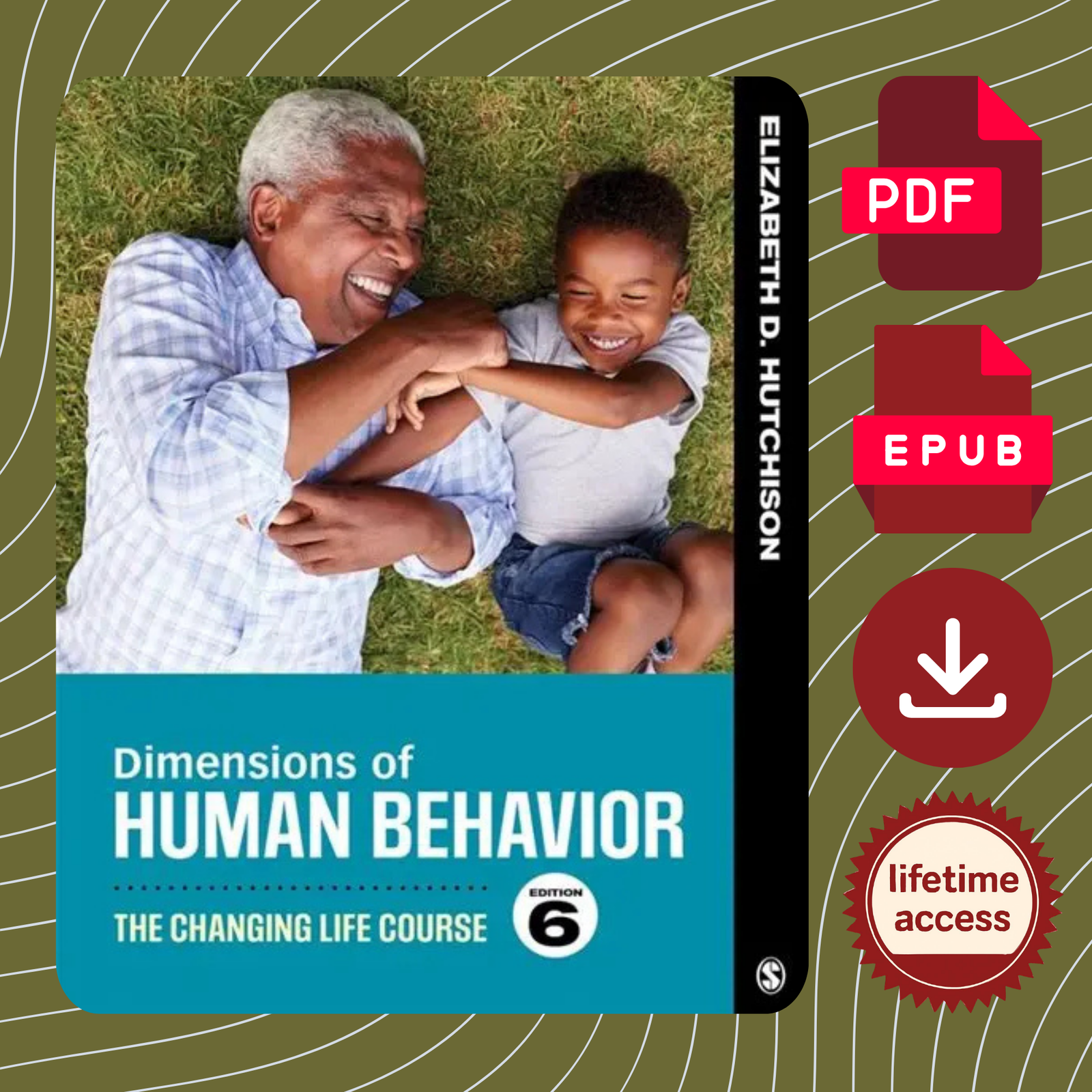
The best One Dimensions of Human Behavior: The Changing Life Course (6th Edition) – The Essential Guide to Understanding Human Development

The best One Dimensions of Human Behavior: The Changing Life Course
Understanding human behavior is an important part of many academic and professional fields, especially social work, psychology, counseling, healthcare, education, and human services. People change throughout their lives, and understanding these changes requires looking at the many biological, psychological, social, cultural, and environmental factors that shape human development.
Dimensions of Human Behavior: The Changing Life Course (6th Edition) is a valuable academic resource for students and professionals who want to develop a deeper understanding of human behavior across different stages of life. The book explores the life course from a multidimensional perspective, helping readers examine how individuals develop and change while interacting with their families, communities, and broader social environments.
Table of Contents
- What Is the Life Course Perspective?
- Understanding Human Behavior and Development
- Why Is This Book Important for Students?
- Key Dimensions of Human Behavior
- Understanding Human Development Across the Life Course
- The Role of Social and Environmental Factors
- Who Can Benefit From This Book?
- Final Thoughts
- Get the Book
What Is the Life Course Perspective?
The life course perspective provides a framework for understanding how people develop and change over time. Instead of viewing human development as a simple series of predictable stages, the life course approach recognizes that individuals are influenced by a combination of personal experiences and external circumstances.
Factors such as family relationships, culture, social class, historical events, education, health, and community environments can all influence a person’s development and life experiences.
By examining these factors together, students can gain a more complete understanding of why people behave differently and how their experiences may change throughout their lives.
Understanding Human Behavior and Development
Human behavior is complex and influenced by multiple dimensions. Biological development, psychological processes, social relationships, and environmental conditions can all contribute to the way individuals think, feel, and behave.
Dimensions of Human Behavior: The Changing Life Course (6th Edition) helps readers explore these different dimensions and understand how they interact with one another.
This multidimensional approach can be particularly useful for students who are preparing for careers that involve working directly with individuals, families, and communities.
Why Is This Book Important for Students?
Students in social work and related disciplines often need to understand more than individual behavior. They must also recognize the social and environmental factors that influence people’s lives.
For example, a person’s development may be affected by family dynamics, economic conditions, cultural expectations, education, access to healthcare, and major life events.
Studying these connections can help students develop stronger analytical and critical-thinking skills. It can also help them understand why professionals should consider the complete context of a person’s life when evaluating needs, challenges, and opportunities.
Key Dimensions of Human Behavior
One of the most important aspects of studying human behavior is recognizing that development is multidimensional. Several major areas can influence a person’s life course.
Biological Factors
Biological development can influence physical growth, health, aging, and other aspects of human functioning. These factors may interact with psychological and social experiences throughout life.
Psychological Factors
Thoughts, emotions, personality, cognition, and individual experiences can all play a role in human behavior. Psychological development can change over time and may be influenced by relationships and life experiences.
Social Factors
People develop within relationships and social environments. Families, friendships, schools, workplaces, and communities can all influence behavior and development.
Cultural Factors
Culture can shape values, beliefs, traditions, identity, and expectations. Understanding cultural differences is important when studying human behavior and working with diverse populations.
Environmental Factors
The environment in which a person lives can have a significant impact on their opportunities and experiences. Economic conditions, neighborhoods, education, social policies, and access to resources can all influence development.
Understanding Human Development Across the Life Course
A major strength of the life course perspective is its focus on development over time. Human development does not stop at childhood or adolescence. People continue to experience changes throughout adulthood and later life.
Different stages of life can bring new challenges, responsibilities, relationships, and opportunities. Major transitions such as entering school, beginning a career, forming relationships, becoming a parent, retirement, or aging can all influence an individual’s life experience.
Understanding these transitions can help students and professionals better recognize the unique circumstances that affect people at different points in their lives.
The Role of Social and Environmental Factors
Individual behavior cannot always be understood without considering the environment surrounding a person.
Two individuals may experience similar life events but respond differently because of differences in family support, economic resources, cultural background, education, health, or community conditions.
For professionals working in social services, healthcare, education, and related fields, this broader perspective can be extremely valuable. It encourages practitioners to look beyond individual behavior and consider the larger systems and circumstances that may influence a person’s experiences.
Who Can Benefit From This Book?
Dimensions of Human Behavior: The Changing Life Course (6th Edition) can be a useful resource for a wide range of students and professionals, including:
- Social work students
- Social work educators and instructors
- Psychology students
- Counseling students
- Human services professionals
- Healthcare students and professionals
- Students studying human development
- Professionals working with individuals and families
- Readers interested in social and behavioral sciences
The book can be particularly relevant for students who need to understand human behavior in the context of social work practice and other helping professions.
Final Thoughts
Understanding human behavior requires looking at the whole picture. People are shaped by their biology, psychology, relationships, culture, communities, and environments, and these influences can change throughout the life course.
Dimensions of Human Behavior: The Changing Life Course (6th Edition) offers students and professionals an opportunity to explore these interconnected dimensions and develop a broader perspective on human development.
For students studying social work, psychology, human services, healthcare, or related disciplines, developing a strong understanding of the life course can provide an important foundation for working effectively with individuals, families, and communities.
Get the Book
Looking for Dimensions of Human Behavior: The Changing Life Course (6th Edition)? Students and professionals can look for the book through authorized academic bookstores, educational retailers, libraries, or other legitimate sources.
Download or Purchase the Book

Book Title: Dimensions of Human Behavior: The Changing Life Course
Edition: 6th Edition
Subject: Human Behavior, Human Development, Social Work
Recommended For: Social Work Students, Psychology Students, Human Services Professionals, Healthcare Professionals, and Educators
Other Books :